 English
 Espanol
 Deutsch
 Francais
 Portugues
 Italiano
Aryna Sabalenka Bounces Back from Tennis Heartache
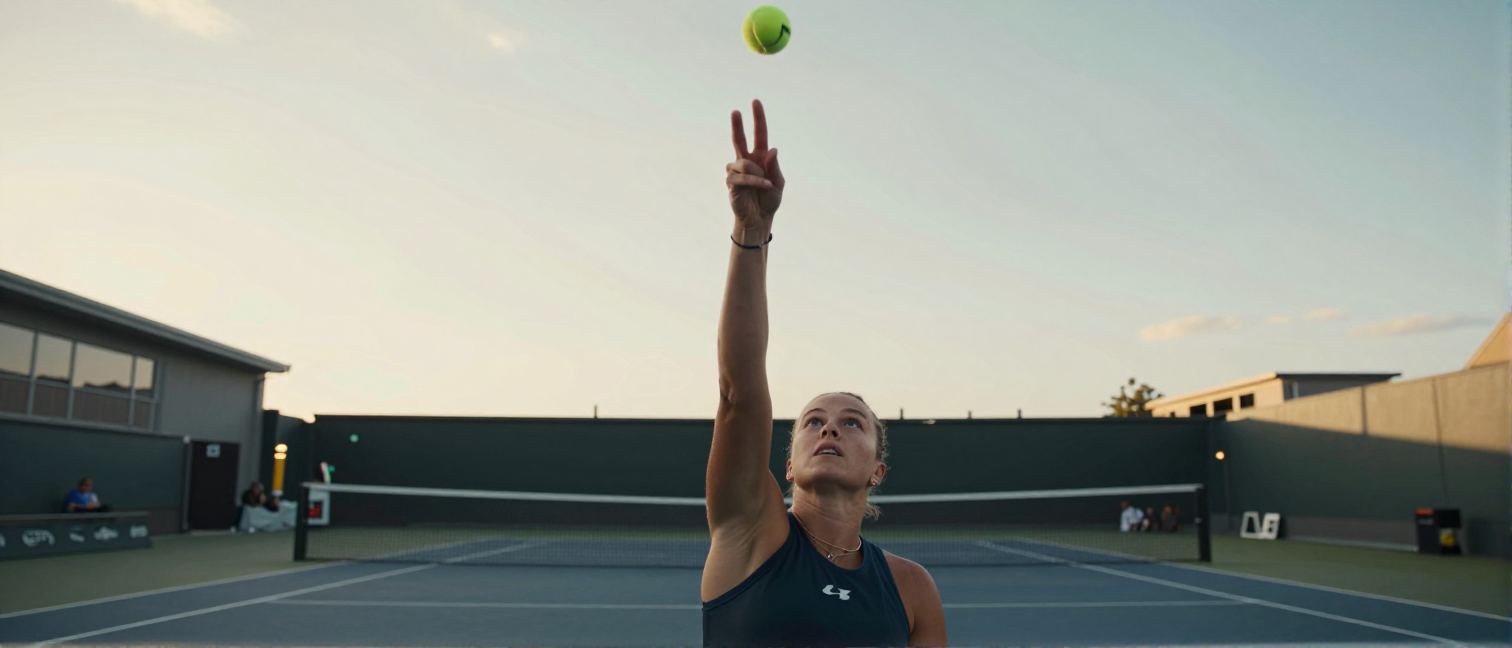
Aryna Sabalenka's team has a routine down for bouncing back from Grand Slam losses, but the Belarusian tennis star's greatest strengths can also become her greatest weakness.
What happened?
After her dramatic loss at the French Open to Diana Shnaider, Sabalenka's team went into crisis mode. The world No. 1's last Grand Slam catastrophe routine was a familiar one: cool her head, get through media obligations, and conduct a psychological autopsy with her inner circle. This time, Sabalenka was very clear about what she wanted to tell the wider world: "Right now I just want to quit tennis." But, as she and her team knew, there wasn't any time for that. Another Grand Slam, Wimbledon, was just over three weeks away.
Why it matters for Aryna Sabalenka
Sabalenka's mental game struggles are a double-edged sword. Her greatest strengths can also become her greatest weakness. Jason Stacy, her mental and physical performance coach, likes to remind the group that earlier in her career, Sabalenka was going through this cycle much more often. "Now it very rarely happens. But my point was the cycle and what happened wasn’t any different. And the best part about this situation for us is that we’ve visited this several times," Stacy said during an interview last month.
What comes next?
Sabalenka's team has a routine down for bouncing back from Grand Slam losses. They conduct a psychological autopsy, discussing what had she been feeling in the days and hours leading up to the match, were there any red flags anyone missed, could they have done something different, where and when did the match start to spin off course, how did she respond, what tools did she use, what didn’t she do, was there something she needed that she didn’t get, did anyone miss anything? The discussion doesn’t go on forever. There are no definitive answers; it’s a process. Another opportunity to learn something, about tennis, and about herself.
The catastrophe routine
The catastrophe routine is a small group of trusted members of Sabalenka's inner circle. Jason Stacy, her mental and physical performance coach, Anton Dubrov, her other main coach, Helen Murawska, her physiotherapist, Sabalenka's fiancé, Brazilian-Greek entrepreneur Georgios Frangulis, and Sabalenka herself. They discuss what had happened, what could have been done differently, and how to move forward. It's a process of learning and growth, not a quick fix.
Breathing and visualization
After the Grand Slam, everyone needs a break. Sabalenka and her fiancé went to Vienna, Dubrov went to see some old friends in Germany, and Stacy went home to the Pacific Northwest to see his family. They all needed some time to switch off and recharge. When they came back, they started working on new tools that Sabalenka might try when everything starts to go sideways. Breathing, versions of meditation and visualization. There is no silver bullet. Only possibilities.
Finding a way to apply the tools
"You have to find a way to apply the things that you believe will help them, but in a way that makes sense to them, that connects with who they are, so they can use it," Stacy said. It's not about finding a quick fix, but about finding a way to apply the tools that Sabalenka believes will help her. And that's a process that takes time, patience, and practice.
The way forward
Sabalenka's team is working hard to help her overcome her mental game struggles. They are using a combination of breathing, meditation, and visualization to help her stay focused and composed under pressure. It's a process that takes time, but they are confident that they can help her find a way to overcome her struggles and become a stronger, more resilient player.
A new autopsy
The discussion doesn’t go on forever. There are no definitive answers; it’s a process. Another opportunity to learn something, about tennis, and about herself. And then they all go their separate ways, because after a Grand Slam, everyone needs a break.