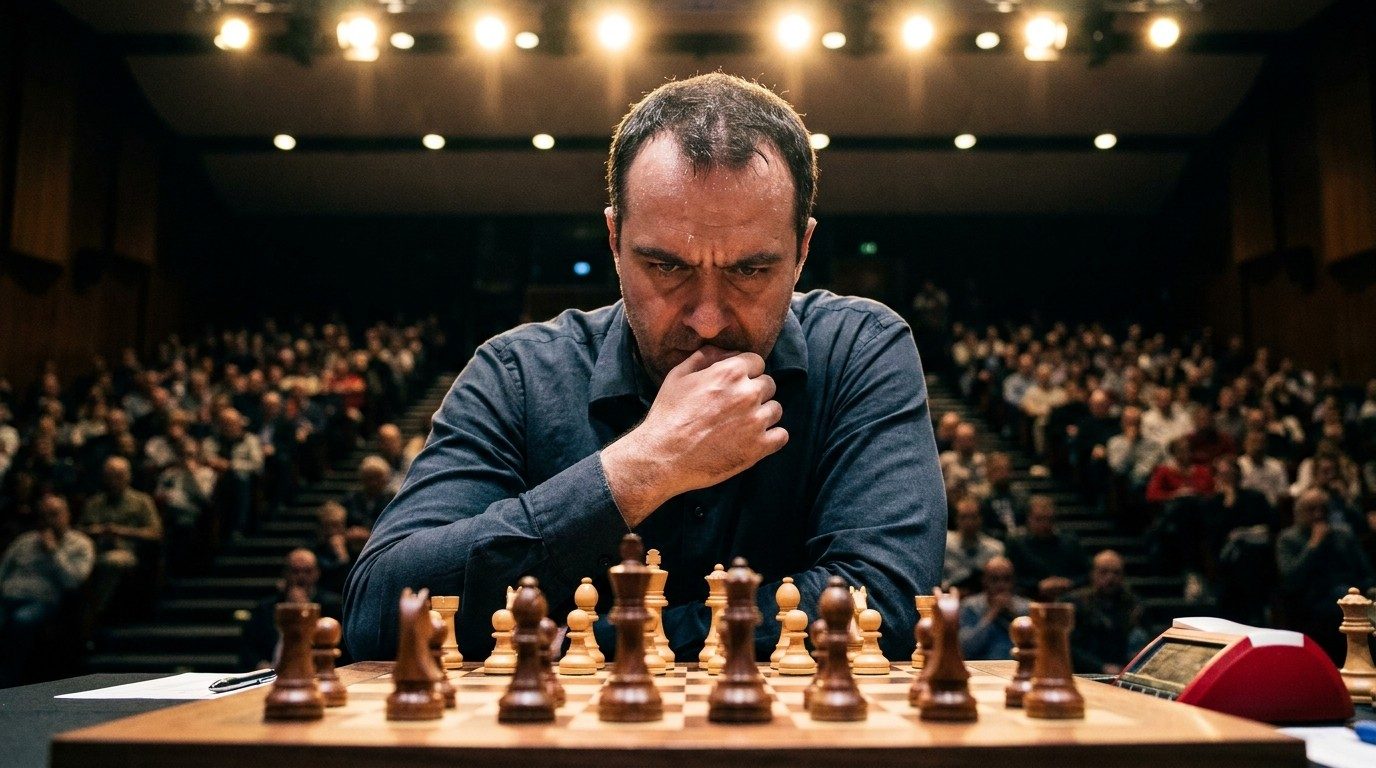
Vladimir
Kramnik
Career overview
He became the Classical World Chess Champion in 2000 by defeating Garry Kasparov and held the title until 2006, later becoming the first undisputed World Chess Champion.
Career honours
Records
Biography
Early Life & Origins
Vladimir Kramnik was born in Tuapse, Russia, and showed an early talent for chess, studying at the chess school founded by Mikhail Botvinnik. His family background includes a Ukrainian mother, Irina, who is a music teacher, and a biological father who was an artist. Kramnik's chess journey began in earnest, leading to his first significant achievement at the 1992 Chess Olympiad.
Rise to Prominence
Kramnik's ascent in the chess world was marked by his impressive performances in the mid-1990s, including a notable fifth-place finish at the 1993 Linares tournament. His breakthrough came in 2000 when he defeated Garry Kasparov, the reigning champion, to become the Classical World Chess Champion. This victory established him as one of the elite players in chess history.
Playing Style & Technique
Kramnik is celebrated for his deep understanding of opening theory and strategic play. He is known for his solid and defensive style, often employing the Berlin Defense, which proved effective against Kasparov. His ability to navigate complex positions and maintain composure under pressure has made him a formidable opponent throughout his career.
Defining Moments & Achievements
Kramnik's career is highlighted by several key achievements, including his successful title defense against Péter Lékó in 2004 and his unification match victory over Veselin Topalov in 2006. He held the title of Classical World Champion from 2000 to 2006 and was the undisputed World Champion from 2006 to 2007, marking a significant period in chess history.
Rivalries & Era Context
Kramnik's rivalry with Garry Kasparov defined a significant era in chess, with their 2000 championship match being a pivotal moment. He also faced strong competition from players like Viswanathan Anand and Veselin Topalov, contributing to a highly competitive landscape in chess during his peak years.
Legacy & Impact
Kramnik's impact on chess extends beyond his tournament victories; he is recognized for his contributions to opening theory and his advocacy for chess education. After retiring in 2019, he has focused on initiatives to promote chess among children, ensuring his legacy continues to influence future generations of players.
Stats in detail
Championships
Kramnik's championship history showcases his dominance at the highest level.
| Classical World Champion | 2000-2006 |
| Undisputed World Champion | 2006-2007 |
| Defended Title | 2004 against Péter Lékó |
Major Tournaments
Kramnik's tournament successes reflect his skill and consistency.
| Dortmund Tournament Wins | 10 times (1995-2011) |
| Linares Tournament Wins | 1 time (2004) |
Olympiad Performance
Kramnik's contributions to team events have been significant.
| Olympiad Appearances | Multiple |
| Gold Medal Performance | 1992 (8 wins, 1 draw, 0 losses) |
Peak Performance
Kramnik's peak performance metrics highlight his elite status.
| Peak Rating | 2817 |
| World Number 1 Duration | 6 months (January-June 1996) |
Career timeline
Head-to-Head
Latest Kramnik News
All 31 stories →
 Netherlands
 Norway
 United States
 Russia
 India
India